

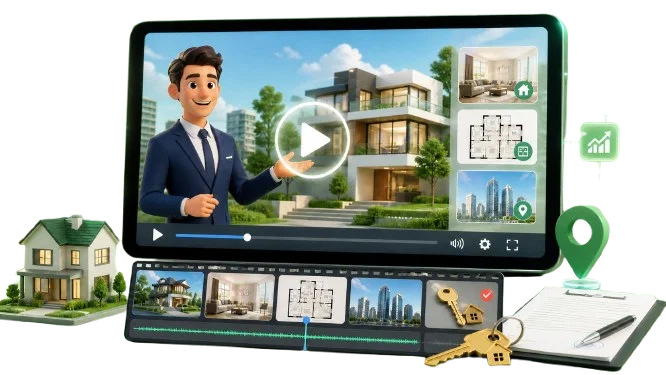
Static images often fail to represent the true potential of a property; that’s the reason real estate developers are turning to an immersive technique of 3D animation instead of using traditional methods for property presentation. According to reports, listings with 3D visuals get up to 49% more qualified leads.
This shows how 3D animation is changing the game of property marketing by turning basic project drawings into lifelike digital experiences. From corridors and kitchens to bedrooms and balconies, 3D animation gives a smooth, continuous flow which makes buyers feel as if they are already inside their future home.
This guide will let you explore how a real estate animation video helps developers in setting marketing strategies that attract potential buyers.
What is 3D Architectural Visualization?
3D architectural visualization is a process of creating three-dimensional digital visuals of buildings, interiors, landscapes, and other designed environments by using specialized software.
Types of 3D Animation Used in Real Estate
To deliver a strong and visually appealing property presentation, it is essential to understand the different types of 3D animation used in real estate marketing. It includes:
- Interior Walkthrough 3D Animation – This type of 3D animation allows viewers to experience interiors of the buildings, including layout, design, and other features.
- Exterior 3D Flythrough Animation – This drone-style animation is used to showcase the external architecture of the project, including its location and surroundings.
- Interactive 360-Degree Views – Allow potential buyers to explore a property in a fully immersive way by rotating and viewing the space from every angle.
- Time-Lapse Animation – This 3D visualization technique is used to show the progress or transformation of a property over time in a fast, continuous sequence.
- 3D Floor Plans – This type of 3D animation is used to convert traditional 2D architectural drawings into realistic and easy-to-understand 3D layouts.
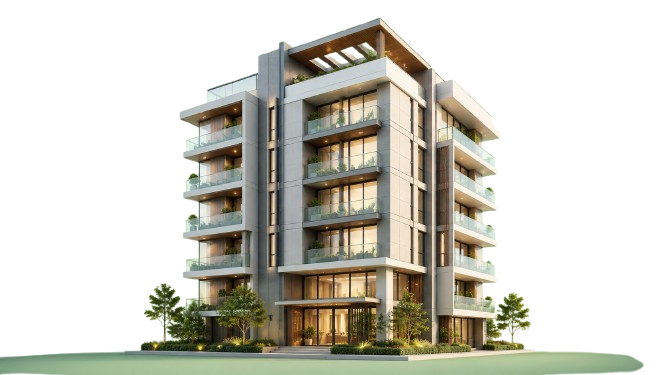
Why Real Estate Developers Rely on 3D Animation?
Recent studies show that homes with 3D home tours can sell up to 9% higher and 31% faster than listings without them, which reflects the potential of 3D animation in property marketing. Here are the key benefits of 3D architectural visualization:
Immersive Virtual Tour
Give a comprehensive and interactive experience to buyers by visualizing every corner of the property, especially before it is built. With a dynamic representation, interior layouts, exterior designs, and landscapes, every thing highlighted in a visually engaging way.
Increase Marketing & Sales
3D architectural visualization helps in setting strategic marketing campaigns by enhancing property listings, social media campaigns, and presentations that grab the attention of potential buyers and increase sales conversions.
Gain A Competitive Edge
As the real estate market becomes more competitive than ever, businesses using 3D animation for property marketing gain a competitive advantage by making their projects stand out and attract more potential buyers.
Reduce Cost & Save Time
3D animation helps real estate developers save time and cost by eliminating expensive model homes, staging, and repeated visits, while enabling a single animation to be used across multiple marketing platforms effectively.
Boost Marketing & Sales
Developers are focused on enhancing real estate property marketing with 3D animation, which makes listings, ads, and presentations more engaging and interactive, attracts more potential buyers, increases online engagement, and ultimately helps boost sales and conversion rates.
Improve Client Communication & Decision
If the buyers and investors are not aware of the architectural background, then 3D animation makes it easier for them to understand complex project designs, layouts, spatial flows, and material finishes that help them make an informed decision.
How 3D Animation Is Used for Property Marketing
3D animation for property marketing involves multiple technical stages. Professional teams like Swift Animation manage the complete process efficiently to produce realistic, high-quality property visuals. The steps include:
Step 1 – Data Collection And Planning
Start the process by getting all essential data of the property, including architectural drawings, floor plans, site details, and design references. Proper planning is done to understand the client’s vision, target audience, and marketing goal before beginning the actual 3D process.
Step 2 – 3D Modeling
In this step, the animation team creates a digital model of the property carefully, highlighting every element such as walls, rooms, windows, doors, and surroundings, which allows detailed 3D architectural visualization.
Step 3 – Animation And Camera Paths
For creating a realistic 3D real estate animation video, the animation team brings life to the designed model by adding lighting and textures. Then, smooth camera movements are created to highlight architectural features and simulate a natural walk-through.
Step 4 – Rendering And Post Production
Rendering is the final stage of creating stunning 3D architectural visualization, where 3D animators use advanced rendering techniques to produce high-quality output. In post-production, color correction, visual effects, and enhancements are added for a more polished animation.
Conclusion
Developers and agents are embracing the power of 3D tools to create real estate animation videos for marketing because the buyers’ expectations are getting higher. Whether you’re selling homes, offices, or commercial spaces, using 3D visuals can give a major edge by bringing an unparalleled visual experience to the table for buyers.
Willing to get a professional property marketing animation in the USA? Then get in touch with Swift Animation, a leading animation company that enhances your real estate with world-class 3D animation. With deep expertise, we blend high end visual to your projects that let your business stand out in a crowded market.
FAQs
How do 3D animations differ from Traditional Marketing methods?
3D animations show realistic, interactive property views, unlike static images or brochures that offer limited and flat visualization.
How is 3D visualization changing the real estate industry?
It makes properties easier to understand, increases engagement, and helps buyers decide faster with more clarity and confidence.
Who should use 3D architectural visualization?
It is ideal for real estate developers, architects, and marketers who want to present projects more engagingly.
What is the future of 3D in Property Marketing?
It is moving towards more immersive experiences like VR, AR, and real-time walkthroughs for better buyer interaction.
Which tools are used for 3D Visualization?
Tools like Blender, SketchUp, 3ds Max, and Unreal Engine are commonly used to create realistic property visuals.