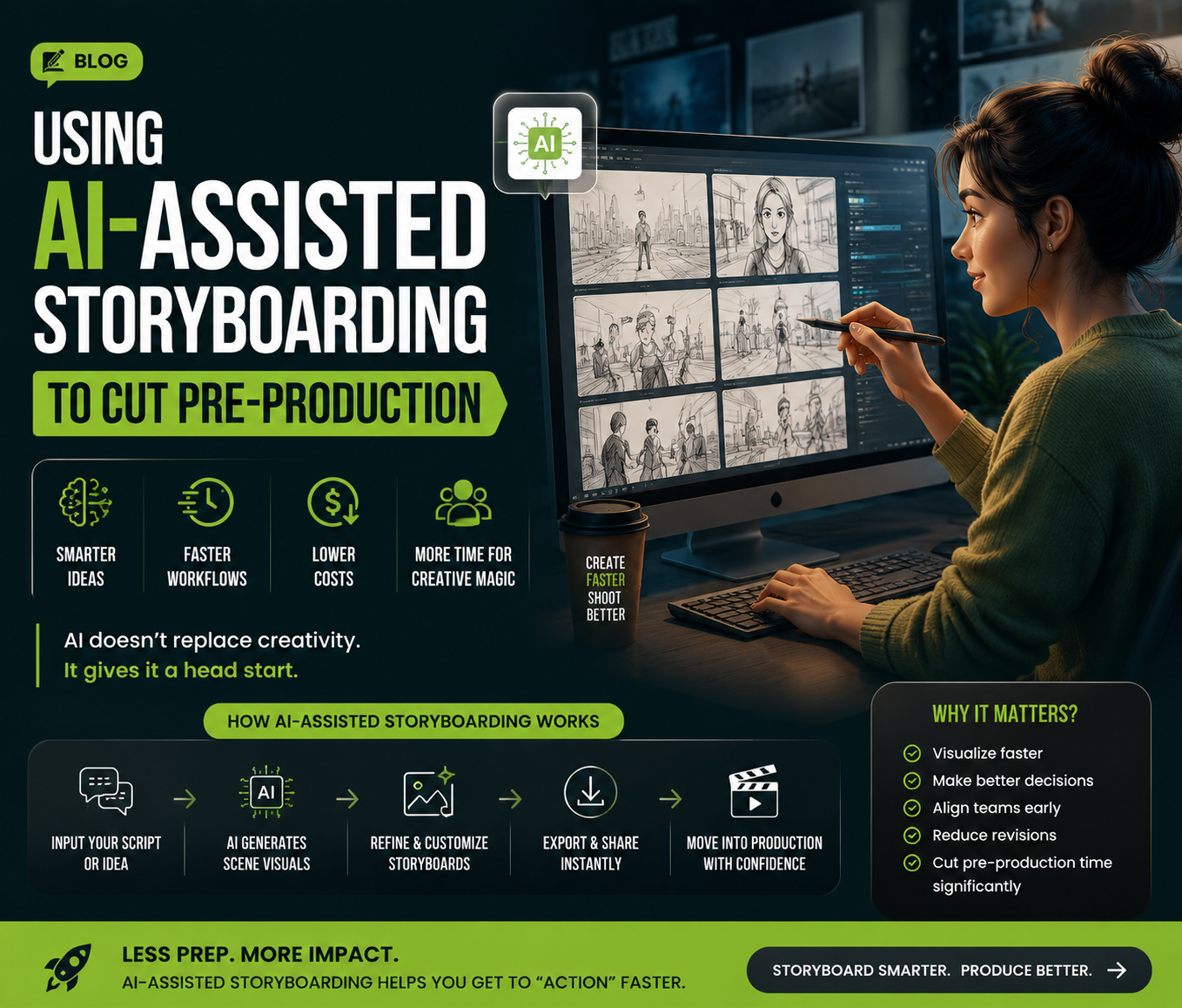
In today’s fast-moving digital world, traditional storyboarding is starting to feel outdated. Spending days on sketches, planning scenes, and revising ideas just doesn’t work anymore because brands are constantly racing against time to create fresh, engaging content. That’s where AI storyboarding animation steps in and changes everything.
Research shows that AI can reduce production times by up to 50%, which makes the whole process faster and more creative. Brands can bring their concepts to life in just a few minutes with AI storyboarding animation, instead of waiting for days or weeks. This article will guide you on how AI is reshaping the storyboarding process and cutting pre-production time nearly in half.
What is AI Storyboarding Animation?
AI storyboarding animation is the process of using AI tools to automatically create storyboard visuals, instead of manually drawing scenes. It allows users to simply enter text, scripts, or images, then AI generates storyboard panels with suggested scenes, compositions, camera angles, and layouts. It makes the process faster, easier, and more efficient by turning ideas into visual frames within minutes.
Why AI Storyboarding Animation Matters?
A recent survey shows that 72% of business leaders report significant productivity gains when AI is widely implemented, while expectations suggest AI could increase overall productivity by around 42% by 2030.
It shows how AI is evolving in industries, and this shift is directly reflected in the animation workflow by streamlining the storyboarding process. Let’s have a look at its importance:
- AI speeds pre-production by turning scripts into visuals instantly.
- Ensures visual consistency across scenes with fewer creative errors.
- AI tools reduce the need for expensive storyboard artists significantly.
- Provides clear visuals, helping teams understand and give feedback.
- Enables non-designers to create professional storyboards using text prompts.
AI Pre-Production Video Works In 5 Simple Steps
AI-powered storyboarding cuts pre-production time in half, which sounds impressive, but how is it possible? The answer lies in a smarter process that is outlined below in sequence:
Step 1 – Input Your Script or Idea
Start by entering your script, concept, or even a rough idea into an AI tool. This removes the need for long brainstorming sessions and manual planning, allowing teams to quickly move from concept to execution without wasting time on initial setup.
Step 2 – Automatic Scene Breakdown
AI analyzes your script and instantly divides it into structured scenes, identifying actions, transitions, and key moments. This eliminates hours of manual effort spent organizing the storyline, helping teams understand the flow faster, and moving ahead without delays in planning
Step 3 – Generate Visual Storyboard Frames
The AI quickly creates visual frames by placing characters, backgrounds, and elements into each scene. Instead of drawing every shot manually, creators get instant visual previews, saving days of work and making it easier to understand how the final output will look.
Step 4 – Edit and Iterate Instantly
You can refine scenes by adjusting visuals, changing styles, or updating prompts. Unlike traditional methods, where revisions take hours or days, AI allows instant changes and multiple variations, reducing feedback cycles and helping teams finalize storyboards much faster.
Step 5 – Collaborate and Finalize Quickly
Teams can share AI-generated storyboards in real time, making feedback, approvals, and updates much faster. With everyone aligned on clear visuals, decisions happen quickly, reducing delays and enabling a smooth transition from planning to actual production work.
List of Animation Workflow AI Tools 2026
In 2026, AI will become essential in animation workflows. It simplifies everything from design to motion creation, saving time and effort. Here’s a quick look at the most popular AI tools for storyboarding that animators rely on today:
Storyboard Hero
- Feature – Turns scripts into structured visual storyboards automatically.
- Best Use – Quick pre-visualization for ads, explainer videos, and concept development.
LTX Studio
- Feature – AI-driven end-to-end storytelling with scene generation and editing.
- Best Use – Cinematic storytelling, film pre-production, and concept visualization.
Studio Binder
- Feature – Combines storyboarding with production planning and scheduling tools.
- Best Use – Film production teams managing full pre-production workflows.
Boards
- Feature – Easy drag-and-drop storyboard creation with AI assistance and collaboration tools.
- Best Use – Agencies and teams needing fast client-ready storyboards.
Neolemon
- Feature – AI-powered video planning and animation workflow optimization.
- Best Use – Marketing videos, brand storytelling, and fast creative ideation.
Challenges & Limitations of AI Storyboarding Animation
While making the animation process faster and more efficient than ever, AI storyboarding animation comes with the following challenges that creators must know:
- Struggles with complex storytelling structures
- Tool limitations vary across the platforms used
- Learning curve for advanced features exists
- Less control over detailed artistic direction.
- Depends heavily on clear prompt quality.
Can AI Replace Human Storyboarding Artists?
A common question that comes to mind: Will AI replace storyboard artists? The answer is NO. According to a survey, 85% of designers and developers believe that AI will be essential for future success, but it cannot replace human creativity. For complex projects like films, high-end animations, or emotionally driven storytelling, human storyboard artists are always required. Without human expertise its not possible to bring imagination, emotional depth, and creativity into animated visuals.
Conclusion
AI storyboarding animation is completely changing the way stories come to life, making the creative process faster, smarter, and more efficient than ever before. But even with all its power, AI still cannot replace the emotion, imagination, and storytelling depth that humans bring.
Ready to bring your ideas to life faster with AI-storyboarding animation? Partner with Swift Animation and transform your concepts into powerful, visually engaging stories with speed, creativity, and precision. Let’s create something extraordinary together.
FAQs
How does AI improve the storyboarding process?
AI improves storyboarding by automating scene creation, speeding visualization, reducing manual sketching, and enhancing workflow efficiency for creators.
Are AI storyboard tools suitable for creators and small teams?
Yes, AI storyboard tools are ideal for creators and small teams because they are affordable, easy, and save production time.
Which industries benefit most from AI-generated storyboarding tools?
The film, animation, advertising, gaming, and digital marketing industries benefit most from AI storyboarding tools due to speed and efficiency improvements.
What are the benefits of using AI for animation storyboarding?
AI saves time, reduces costs, improves collaboration, enhances creativity, and helps teams visualize ideas faster during pre-production stages.
How secure is my content when using online AI storyboard tools?
Content security depends on platform policies; most tools use encryption, but users should always review privacy terms before uploading scripts.