

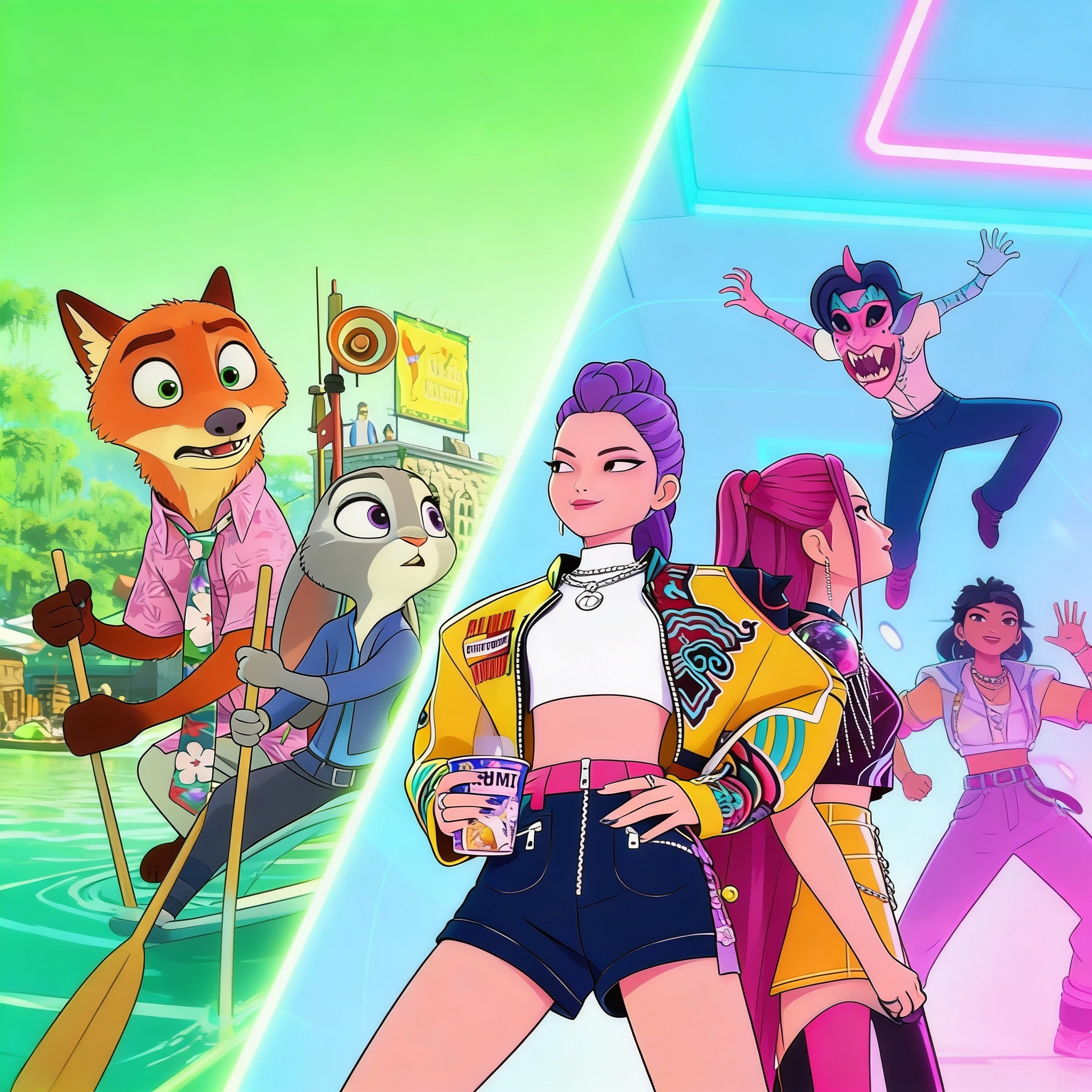
While Disney’s Zootopia 2 and Netflix’s KPop Demon Hunters are going from strength to strength and breaking records across the globe, South Korea, the hub of K-pop and manhwas around the world, is finding it difficult to churn out an animated success that will lure audiences other than those in the younger generation.
The global cultural product of South Korean culture, from Japanese BTS and Parasite to Squid Game, has become a global phenomenon in its own right. But in global full-length animated cartoon production, South Korea is still lagging behind Japan and the US.
The Japanese blockbuster of the year 2025 is “Demon Slayer: Kimetsu no Yaiba – Infinity,” which held the top position in the Korean box offices. On the other hand, Zootopia 2 broke records with three million viewers within the first 11 days, thus confirming that there is a great demand for a large-scale animation.
As per experts, the budget is the largest challenge that is delaying the Korean animation industry. This itself is the most important reason why it is not allowing the industry to be on the same level and quality production, like the animated film Zootopia 2, which had a production cost of about $150 million.
Most Korean animation films are made with the intention of appealing to children only and therefore lack broad appeal and retention capacity within communities of fans across the long term. Another structural factor in the industry environment is the historical contribution of Korean animation studios to overseas animation productions on a subcontracted basis for other productions in Japan and other Western nations.
However, the situation is slowly changing. More investments are being made in Korean cartoons by online streaming services such as Netflix. Local films are also receiving some attention locally and internationally. There are production houses that produce content for a mature audience.
Industry analysts point out that Korea has what it takes to build an international franchise: they possess good stories, good storytellers, and an expanding global platform. Today, they require more investment, more extensive storytelling, and an overall domestic ecosystem for these narratives to come into being internationally.